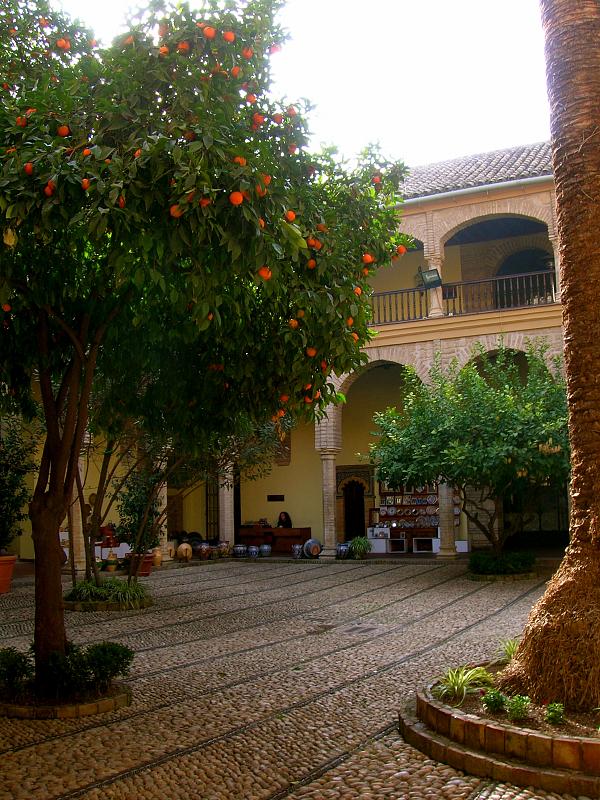
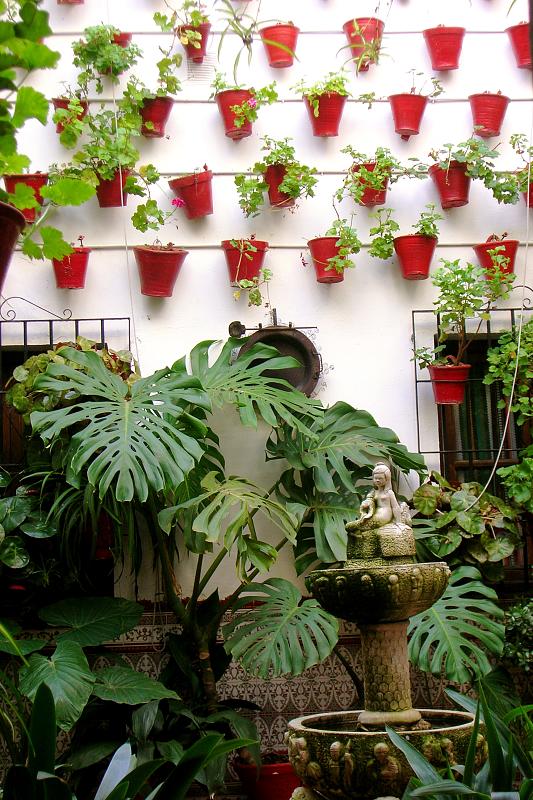
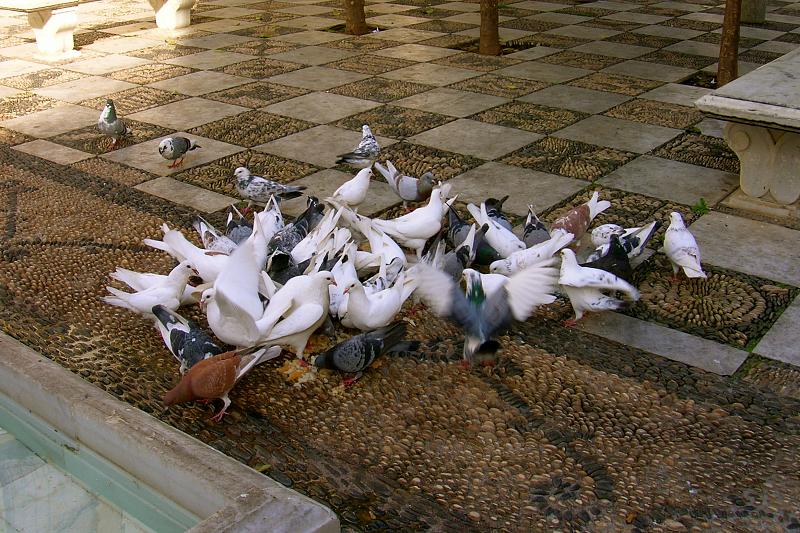
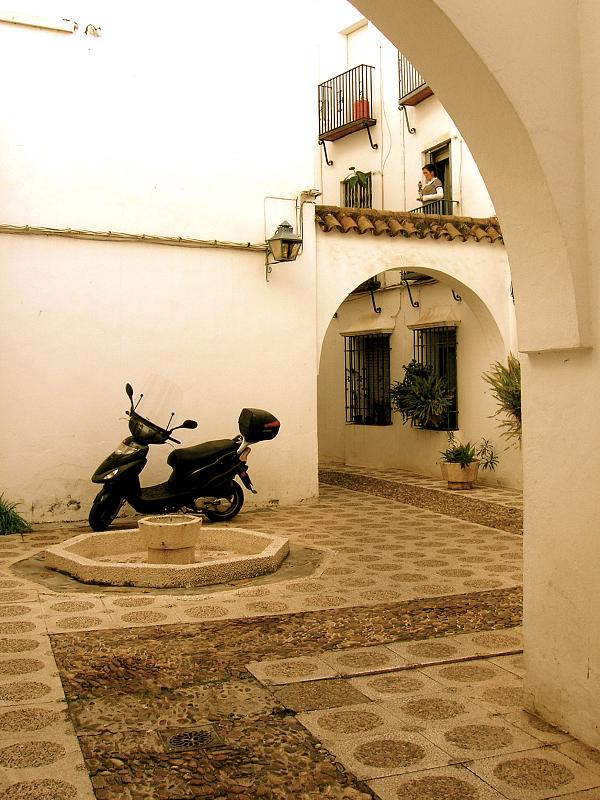
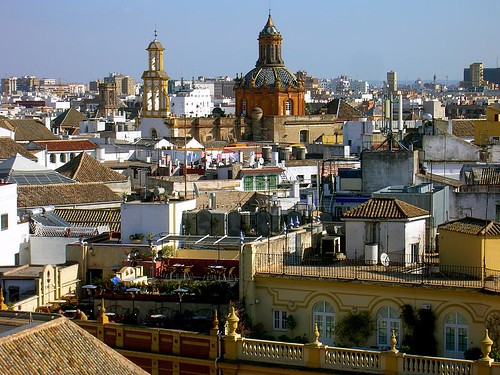
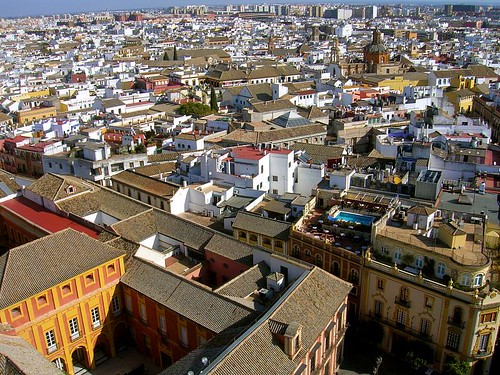
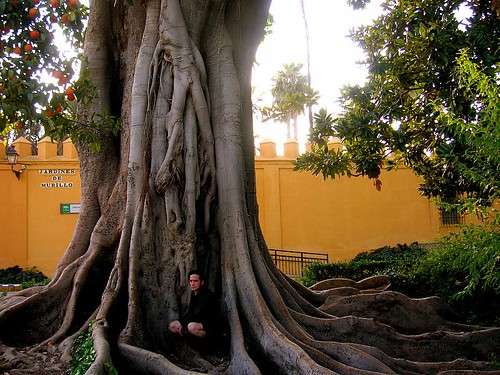
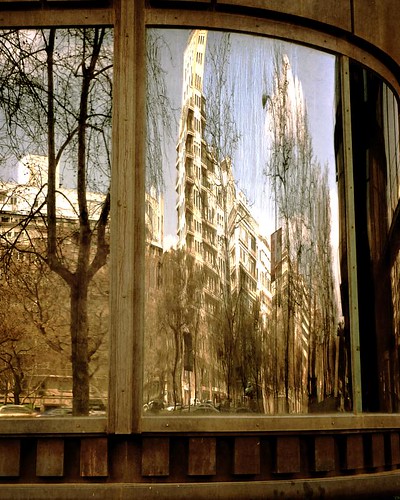
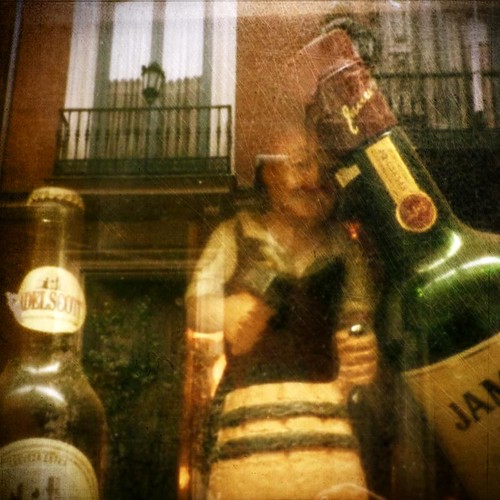
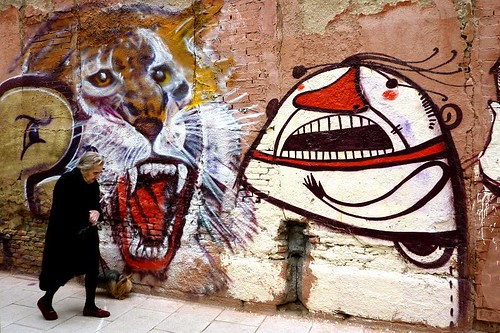
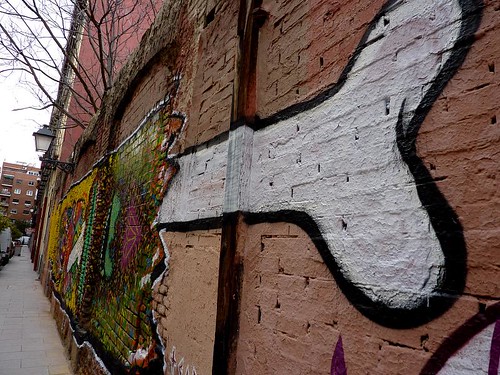
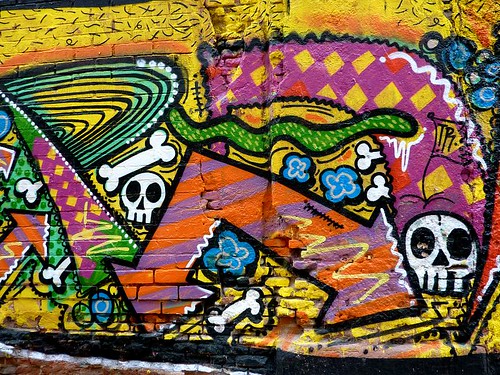
This mosaic of photos comes from one of the first day-trip excursions I took out of Madrid when I arrived in Spain in 2006. I fell in love with the charm of the historical centre but was rather put off by the locals who mocked me for taking photos of their doors and churches.
"Sí sí mi casa es muy bonita," jeered a steel-haired abuela. I'll never forget the ringing of her heckling in my ears. Qué Fuerte!!
Later a group of townies tsk tsked at me and said the equivalent of 'sheesh it's only Toledo'. I was truly stunned by the lack of pueblo pride, in my opinion, this town so richly deserved.
A friend of mine recently moved to Toledo for a job and she tells me that she'd heard the same crusty things about the locals, so she was pleasantly surprised to find them quite helpful the many times she got lost in her new town. Perhaps the recession has softened the sharp tongues of the these tourist-weary townies. Who knows. My friend invited me to come and hangout tomorrow night but I can't for various reasons. Instead I decided to riffle through old photos and do up a post on this beautiful place. I plan to go back soon and this time, I'll have a few choice expressions of my own to toss out at anyone who bugs me about being a shutterbug! Holy Toledo, will I ever. Ha ha...
Toledo, which is seated on a hill above the River Tagus, is the former capital of the Spanish Empire and was once a place where Christian, Jewish and Moorish cultures coexisted. Earlier than this, Romans built a fortress and the Visigoths made Toledo their capital in the 6th century AD. Nowadays, Toledo is known for its right-wing religious leanings, throngs of tourists and its magical beauty.
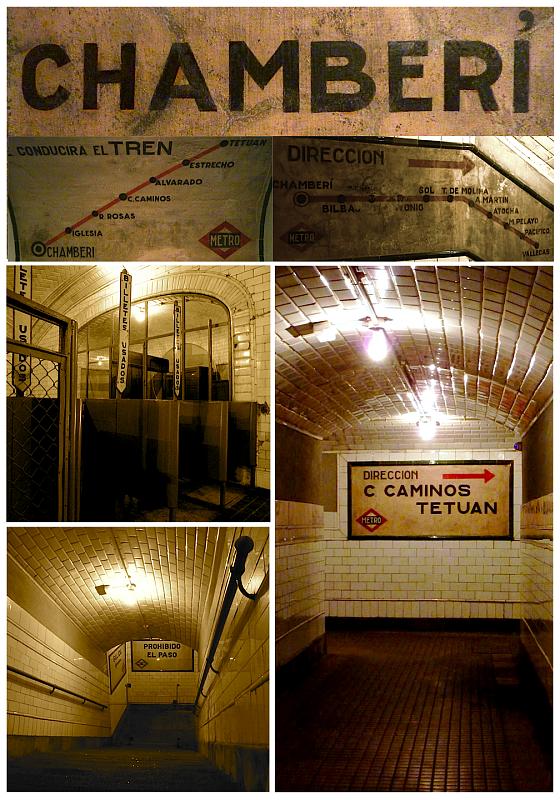
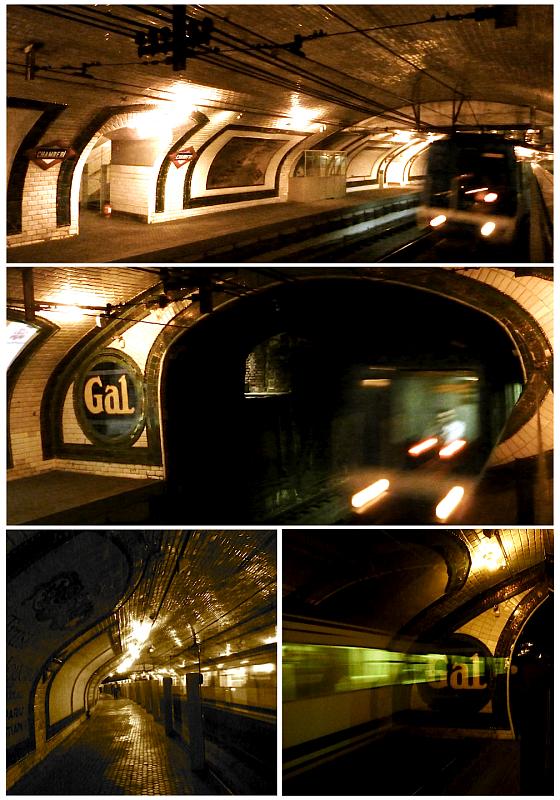
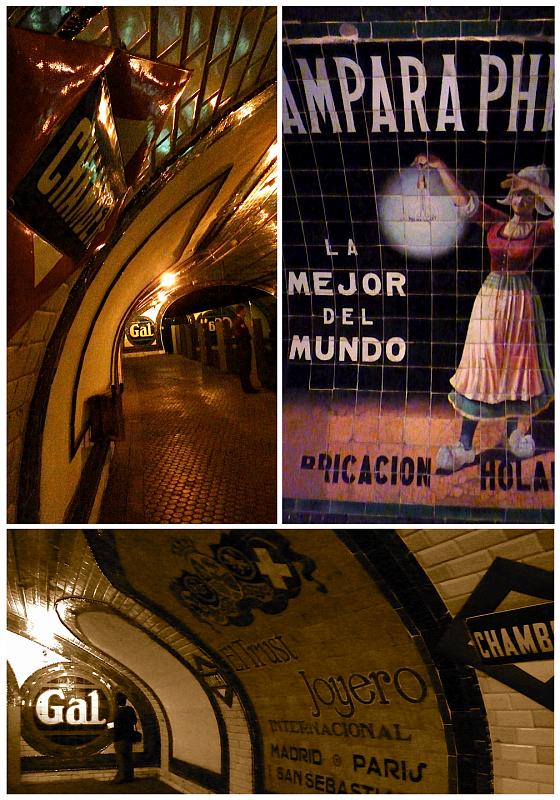
I first discovered Madrid's ghost station as a fleeting vision while I was riding the Metro. I only caught a glimpse of a darkened station, gorgeous tiled adverts and the red diamond sign of Chamberí for a few seconds while the train was whizzing along on Line 1, but I was intrigued.
Chamberí used to be a Metro station on Line 1, between Bilbao and Iglesia. The station, part of the first subway line in Madrid running from Cuatro Caminos to Puerta del Sol, was inaugurated on October 17th, 1919. In May 1966, during work to extend the platform, the Ministry of Public Works discovered that since the station was built on a curve, it'd be too difficult to modify it to accommodate the longer six carriage trains, so they decided to close down the station. Since Chamberi was placed very close to Bilbao and Iglesia this wasn't an inconvenience to anybody.
"They simply switched off the lights and closed the entrance. Everything was left as it was on that last day, even the used tickets and newspapers. It was like this for more than forty years," explains my friend, Dario, a Madrileño. "It became a legend with children (and not so young people) travelling on this line. From time to time, some TV programs would talk about this 'ghost station', and some of them were allowed to enter the place and shoot images of this dusty time machine. In the nineties, the place became a target for adventurers and, unfortunately, some hooligans too. The remains of the station quickly became more and more damaged, until finally the authorities decided to restore it and convert the old station into a museum."
Despite losing its mystery and charming decay since the restoration in 2006, the station still manages to retain a ghostly vibe, especially when you hear the echoed high-pitch song of the train approaching the platform. For those who enjoy the beauty of old subway stations, tiled adverts and a little history, this abandoned Metro stop turned museum is a delightful place to let your imagination wander back to a time long gone.
Andén Cero (Platform Zero), Chamberí Metro Station is open Mondays to Fridays from 11:00 to 19:00 and Saturdays, Sundays and holidays from 10:00 to 14:00. The nearest metros are Bilbao, Iglesia, Alonzo Martínez and Ruben Dario. Entry is FREE.
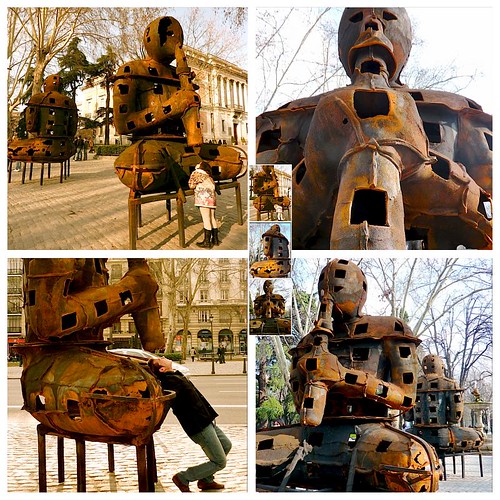
I began with the "Guardianes" sculptures by Xavier Mascaró on Paseo del Prado. I love the way everyone has a peek up the flute to see if he's hiding anything up there.
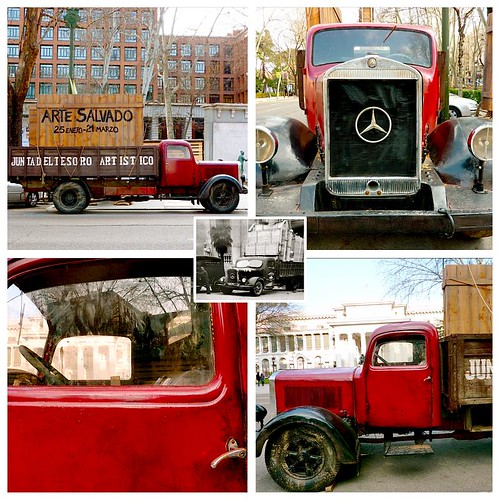
Then I walked across the street. These are photos of the kind of truck used in the rescue of Spain's cultural treasures, the priceless works of art that were in the Prado Museum, during the civil war. Arte Salvado is an outdoor exhibition that celebrates the 70th anniversary of this rescue, which was coordinated by the "International Committee for the Rescue of Spanish Art Treasures". Arte Salvado recreates the events and problems that occurred when several museums in Europe united to save the works they considered to be a fundamental part of humanity's cultural heritage. The black and white photo in the center is an archival photo of one of the truck used in the rescue mission.
Next stop, the Caixa Forum. Fortunately, my timing was good so when I entered just after Spanish lunch, there wasn't a queue. I went to check out Miquel Barceló's show. If you are in town and haven't yet had a chance to see the show, I highly recommend it. Barceló's prowess in various media is phenomenal. His nocturnal images are like visions of Cthulhu. His film, Paso Doble, a performance of the creation of a large piece, is crazy weird and brilliant. All the rooms feature a different aspect of his work, each impressive on their own (from water colours of African scenes to pieces of fruit to Pinocchio's skull), but put together this exhibition showcases the genius creativity of a master artist.
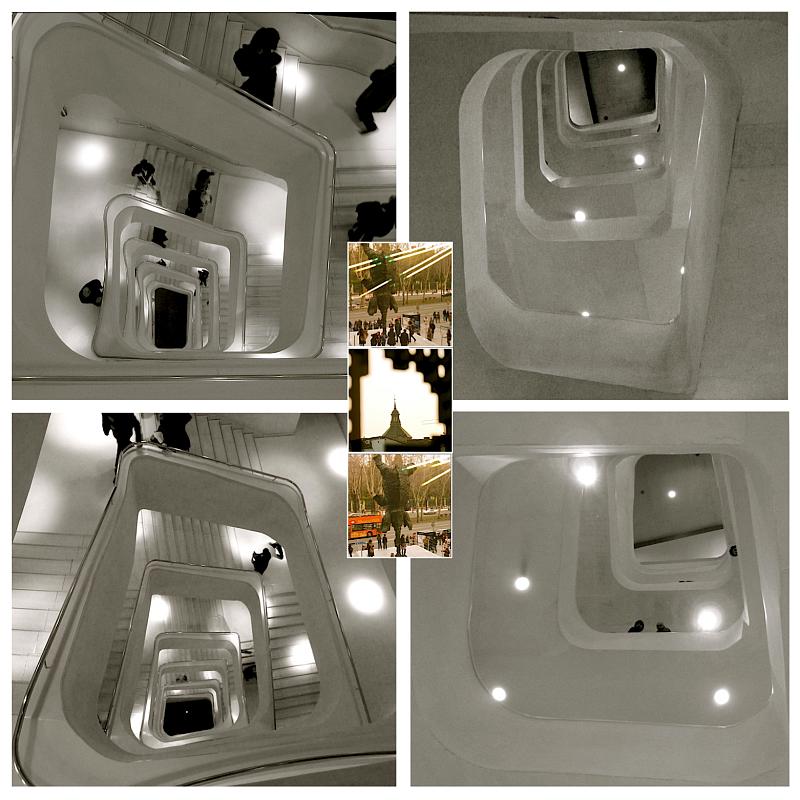
Above is the staircase of Caixa Forum, up and down. In the center are photos of a view out of the grated window on the top floor and Barceló's Elephant in front of the building.
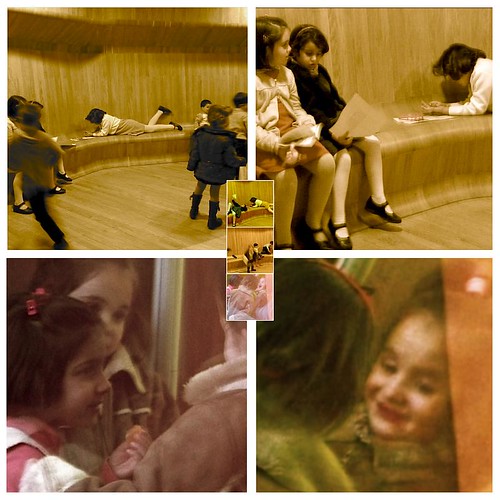
Other people's children. There were so many kids running around so I decided to take some candids of them. The top 2 were taken in the large gallery room on the bottom floor. I wondered if there was a pijo memo sent out to all the parents requiring their little girls wear the combination of white tights and black Mary Janes. Ha ha. Seriously, I love how timeless, classic and darling these children look. The bottom 2 photos are reflections I took of 3 gabby girlfriends on a window in the lobby of Caixa Forum. The little girl's face in the photo on the right reminds me of a Renaissance painting. Qué bonita.
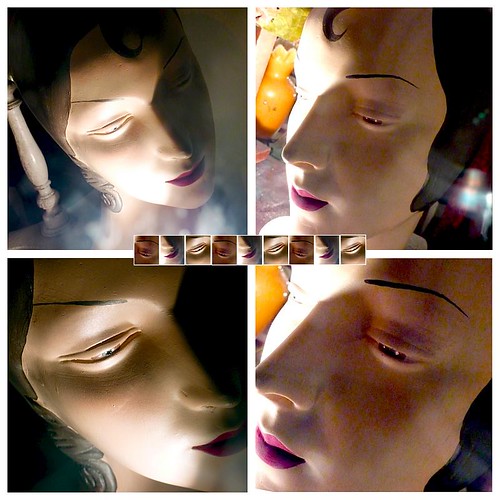
Dos caras de una Mujer. On the way home, I saw this mannequin in a shop window and had to take her photo.
As I was walking down my street, I felt better than I have in a long time. I figure, I'm a pretty good date. Me and myself, we like the same things, we walk at the same pace and we have the same taste. So I'm going to make this habit and take myself out more often and enjoy the time I have left on this leg of my journey. Best of all, this entire art stroll didn't cost a thing. Madrid is full of free art shows, you only need to look.
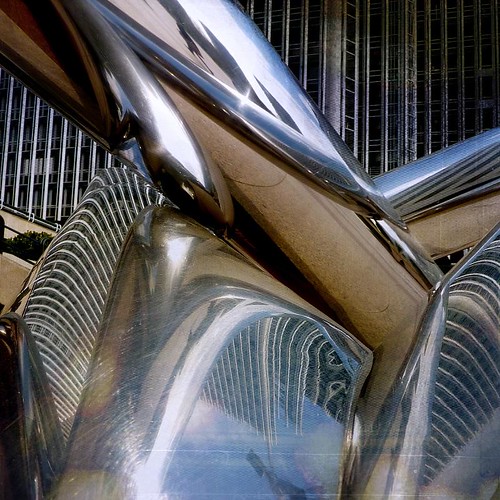
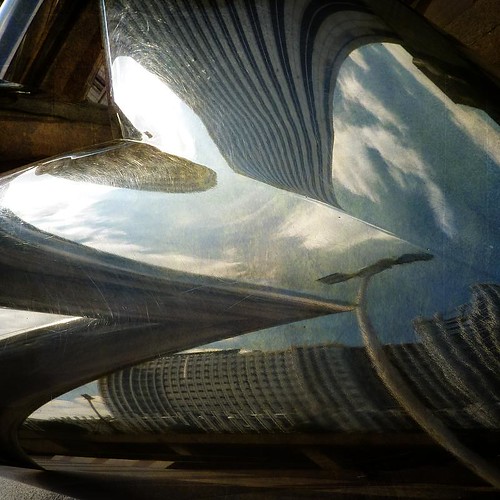
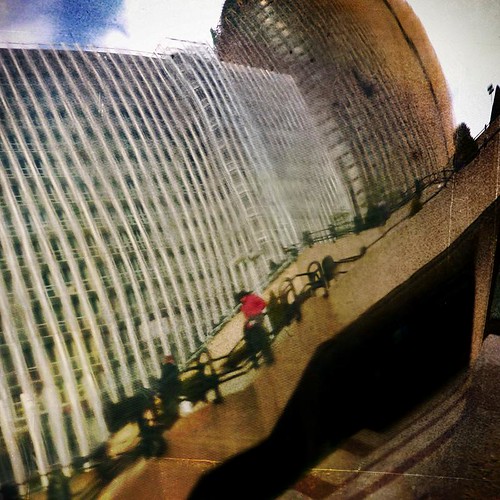
Reflections on the sliver sculpture that sits between Torre Picasso and Ahorro Corporacion in Madrid. For those not in the know, this is the hub of Madrid's financial district. Until 2007, Torre Picasso (designed by Minoru Yamasaki) with its 51 floors was Madrid's tallest building. Nowadays this honour goes to the infamous four towers, which do a superb job of scratching the skyline.
I know, I know, I've had a fetish for reflections lately... but they are so much fun to play with.
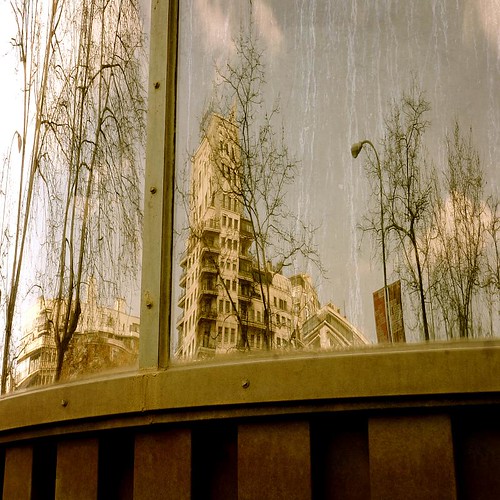
Reflections from the windows on the BBVA building on Paseo de la Castellana. The reflections look like impressionist paintings to me. For some reason the trees remind me of Camille Pissarro's work.
I teach a couple classes in the Picasso Plaza area and I decided it was high time I captured a different part of Madrid so I've been taking my camera along with me. I took a bunch of photos of views from a window on the 21st floor of Torre Picasso, some reflections shots off a gleaming silver sculpture and architectural type photos. I'll share these with you over the next few blog posts.
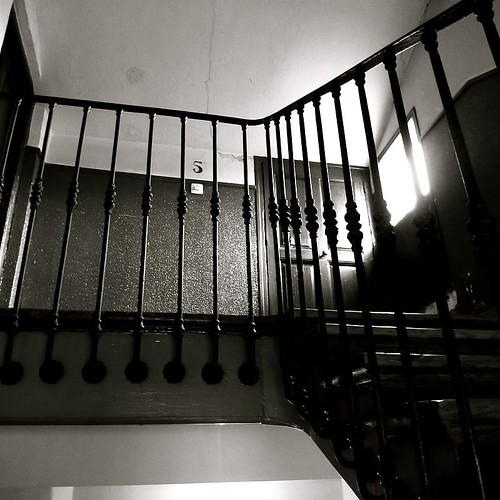
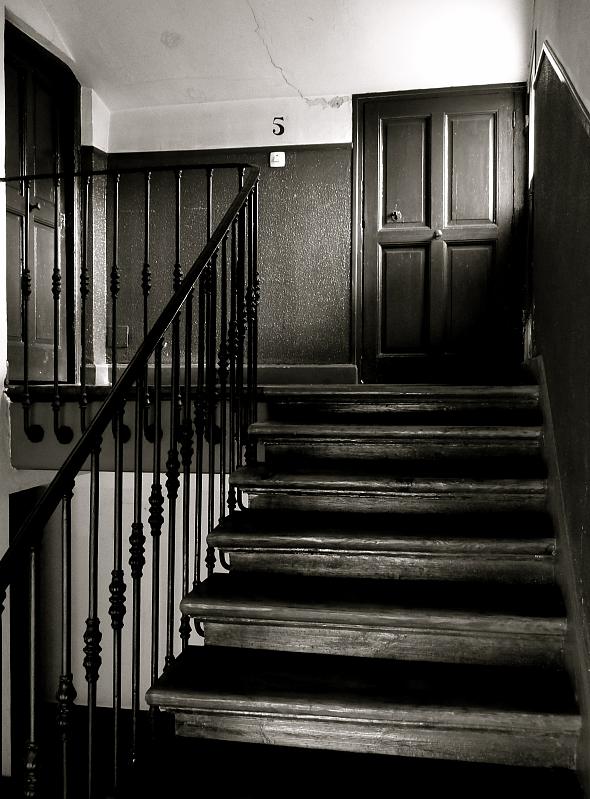
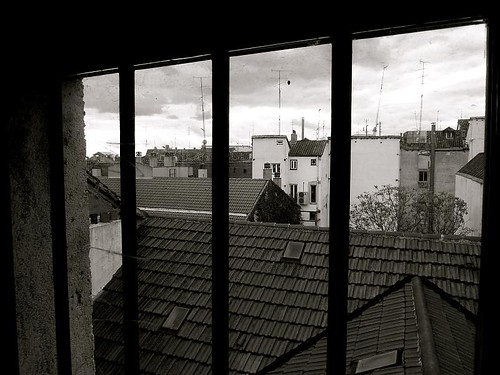
I wandered up to the fifth floor of my building yesterday to look at the hobbit size doors and the view. No one lives in these hobbit rooms, they are for used storage. I love the haunted feel of the photos and the light so I put them together as a photographic poem.
Sometimes you reach the top and then there's no where to go but down...
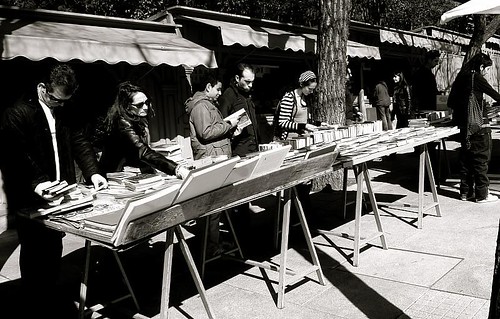
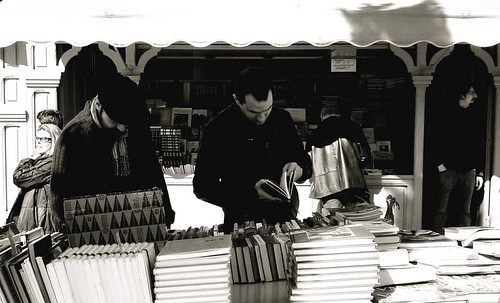
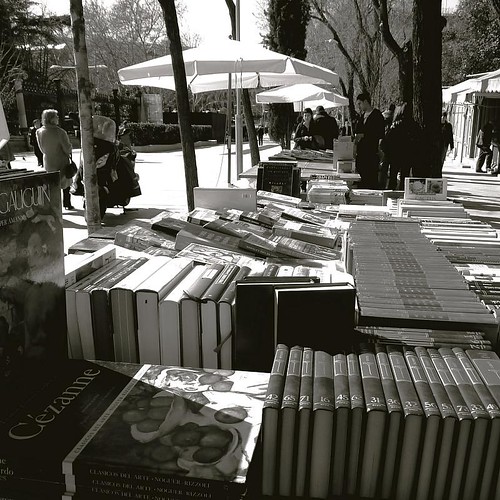
Shoppers browse the wooden, secondhand book stalls that line the gently sloping Calle de Claudio Moyano (commonly known as, Cuesta de Moyano), a wide walkway that leads towards the southwestern corner of Parque del Retiro from the Atocha end of Paseo del Prado. One of the most quintessential outdoor Sunday scenes in Madrid, these book stalls and kiosks have been around for decades.
Detail of window display + reflection: La Fontana de Oro on Calle de la Victoria, 1 in Madrid.
This Guinness Official Irish pub, which serves a variety of Irish beer and spirits, is housed in one of the oldest taverns in Madrid. Legend has it that this pub may also be home to spirits of a more elusive nature than whiskey. The decor is mix of antique dark wood, Celtic flourishes, medieval doodads, dusty bottles, pool table, barrels and a dangling disco ball.
In the past the tavern has been a hotspot for Spanish intellectuals and the Spanish writer, Benito Perez Galdós (1843- 1920) was even inspired to set his first novel (La Fontana de Oro) in this pub.
Photography by Shehani Kay. Scratchy texture by les brumes
These past few weeks have been dark and uncertain ones. Things haven't been working out for me. The storm has been raging on relentlessly. No economic recovery in the forecast for Spain. My boat (teaching hours) has holes which I patch up only to have new leaks appear. The wolves have gathered by the shore. Sinking seems a real threat and I'm having trouble making ends meet. My mind has been racing around contingency plans and I've been plotting and rowing towards new growth. As I struggle to adapt to all this change, one of the inspirations I've been using to keep from drowning is a quote I wrote on a yellow post it note last week and stuck to the wall above my macbook.
It reads: "Adversity is just change we haven't adapted ourselves to yet."
Some weeks ago I watched a passionate talk by Aimee Mullins, a woman who was born without shin bones. Instead of allowing this early adversity to relegate her to the sidelines of life, she became a record-breaker at the Paralympic Games in 1996, and has built a career as a model, actor and activist for women, sports and the next generation of prosthetics. She compares her designer prosthetic legs to designer eyeglasses - she wore 4-inch stiletto heels during her TedMed talk!
Today I'd like to share her inspiring talk about finding opportunities in adversity.
Excerpts of Aimee's talk, transcribed by me:
"The human ability to adapt is our greatest asset...people continually ask me about overcoming adversity and I'm gonna make an admission, this phrase never sat right with me and I always felt uneasy trying to answer people's questions about it and I think I'm starting to figure out why. Implicit in this phrase of overcoming adversity is the idea that success or happiness is about emerging on the other side of a challenging experience unscathed or unmarked by the experience. As if my successes in life have come about from an ability to sidestep and circumnavigate the pitfalls of a life with prosthetics which people perceive as my disability. But in fact we are changed. We are marked, of course, by a challenge whether physically, emotionally or both and I'm gonna suggest that this is a good thing. Adversity isn't an obstacle we need to get around in order to resume living our life. It's part of our life and I tend to think of it like my shadow, sometimes I see a lot of it and sometimes there's very little but it's always with me. Certainly, I'm not trying to diminish the impact, the weight of a person's struggle. There is adversity and challenge in life and it's all very real and relative to every single person but the question isn't whether or not you're going to meet adversity but how you're going to meet it. Our responsibility is not simply to shield those we care for from adversity but preparing them to meet it well...
There is a partnership between those perceived deficiencies and our greatest creative ability. So it's not about devaluing or negating these more trying times as something we want to avoid or sweep under the rug but instead to find those opportunities wrapped in the adversity. So maybe the idea I want to put out there is not so much overcoming adversity as it is opening ourselves up to it, embracing it, grappling with it (to use a wrestling term), maybe even dancing with it. And perhaps if we see adversity as natural, consistent and useful, we're less burdened by the presence of it...
Conflict is the genesis of creation...the human ability to survive and flourish is driven by the struggle of the human spirit through conflict into transformation. So again transformation, adaptation is our greatest human skill. And perhaps until we're tested we don't know what we're made of. Maybe that's what adversity gives us, a sense of self, a sense of our own power. So we can give ourselves a gift, we can re-imagine adversity as something more than tough times. Maybe we can see it as change. Adversity is just change we haven't adapted ourselves to yet. I think the greatest adversity we've created for ourselves is this idea of normalcy. I mean who is normal? There is no normal. There's common, there's typical, but there's no normal and would you want to meet that poor beige person if they existed? I don't think so." Aimee Mullins
While I was slowly transcribing (due to my poor typing skills) these bits that resonated most for me, her words had time to sink in deep. I've decided to take her advice to heart and give myself a gift; the gift of a dance with adversity. As I write this, I'm tossing away my old metaphors of the leaky boat, wolves and bad weather; I'm instead imagining myself in a tight tango to the tune of Por una Cabeza.
Thanks Aimee for being an amazing woman of great spirit.
Original mash up (photography, compilation, digital manipulation and narrative) by Shehani Kay. Inspired by original street art on the wall of Doctor Fourquet in Lavapies, Madrid, by various street artists: Saner, Parsec, E1000ink, Ruina, Sakristan, Pincho, kid chalao, Jaime, Neko, Dier, Ring, Seon, Alberto de Pedro, suso33, vhs (kid chalao, fragil & e1000ink). Thanks to Dug for helping out with the list of credits.
Going from top left across and then down: a1 & a2: (grupo) parsec; a3: dier; a4: e1000ink; b1: dier & ?; b2 & 3:?; c1-3:saner; d1: suso33; d2: vhs; d3: e1000ink; d4: vhs; e1-3: vhs
The ? indicates that I'm sure of the artist's name but he's one of the artists listed above. If you can identify him, please comment and let me know.
Note to the urban artists: I love making mash ups of found street art because it imposes limits and a framework. I can't just draw whatever I need to move along my narrative. I have to work within the confines of what I have photographed and what the artists have drawn. Doing this challenges my skills, creativity and imagination as a storyteller and weaver of narratives. The images are like a puzzle and I have to figure out how to piece together a tale. To those whose works I compile, rearrange and manipulate, I hope you understand that I do it with the highest respect for your art. Your work inspires me to invent stories! Thank you.
Photos from the wall:
You can see more photos of the original wall here and here.
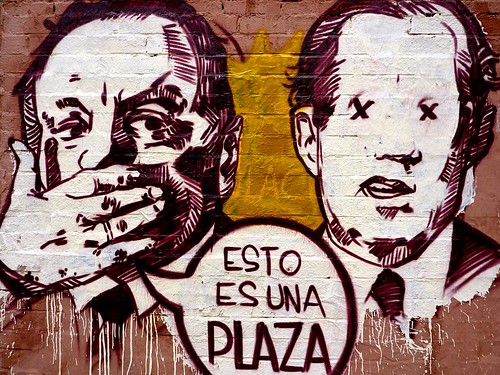
Behind the wall is a public place where the group "Operarios del Espacio Público” in collaboration with many area neighbors have been developing a garden called "Esta es una plaza". The potential green space is open to the neighborhood. The space fosters meetings between different generations and cultures in an attempt to enhance local resources and weave relationships between the residents.
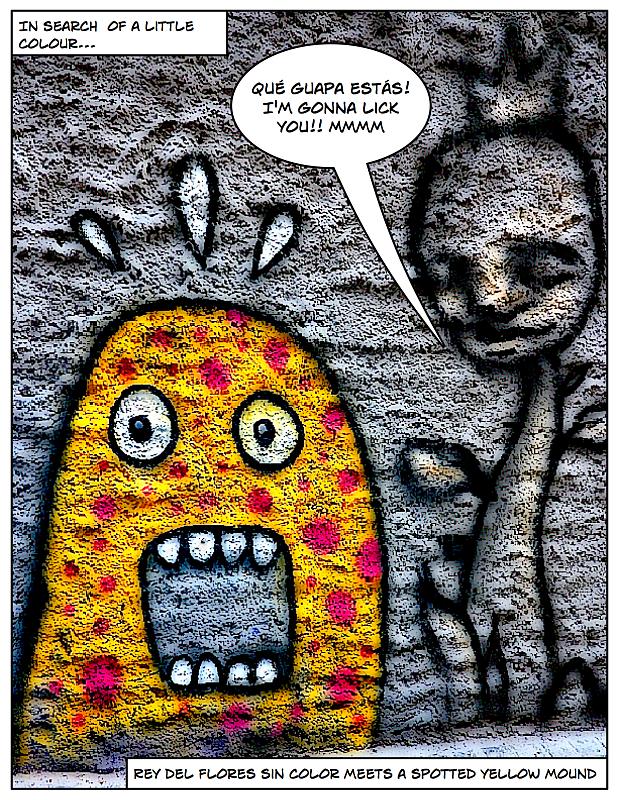
An original mash up (digital manipulation, text, and photography) by Shehani Kay; based on a mix of street art found on a wall on Calle de Torrecilla del Leal in Lavapies, Madrid. The plant is the work of Planton Kracia and I've been told that Ring painted the yellow blob.
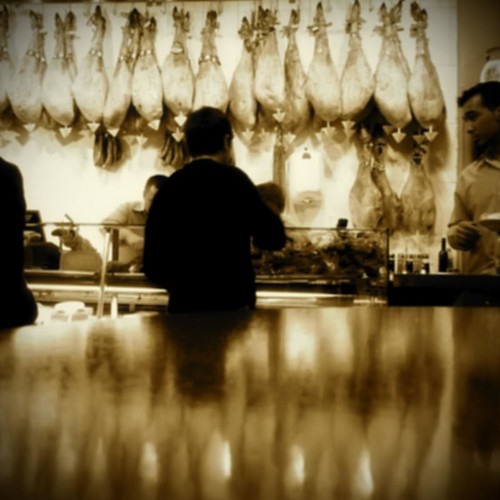
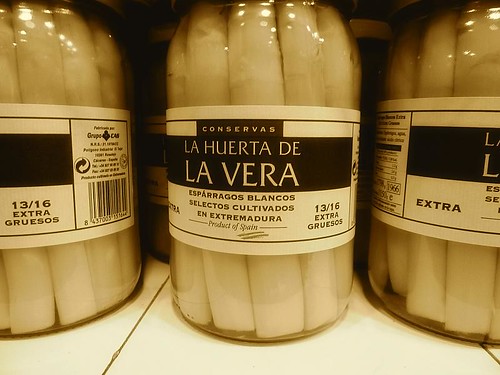
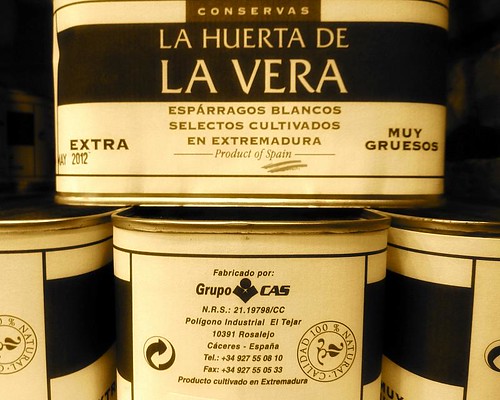
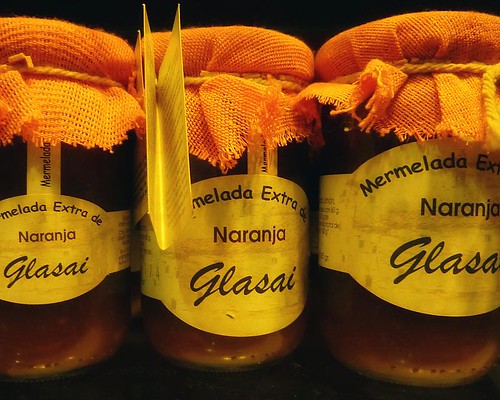
Restaurante El Miajón de los Castúos on Calle Infanta Mercedes, 56 is a tapa spot dedicated to Iberian pork (jamón ibérico de bellota), sausages, cheeses, wines and packaged products from Extremadura.
The name El Miajón de los Castúos comes from the title of a book of 12 poems by Spanish writer, Luis Chamizo. The book, published in 1921, is a tribute to the people of Extremadura and highlights the miajón (the essence, the juice, the core) of being and identifying as Castúos (someone from Extremadura).
Last year I wrote of my discovery of pata negra and the difference in flavor quality, free-range, acorn fed piggies make on the tongue. Well this place specializes in jamón ibérico de bellota. Yum. Our waiter was super helpful and friendly, which is a little unusual for Spain so I recommend this place wholeheartedly. If this is the "juice" de los Castúos then it is very pleasant indeed.
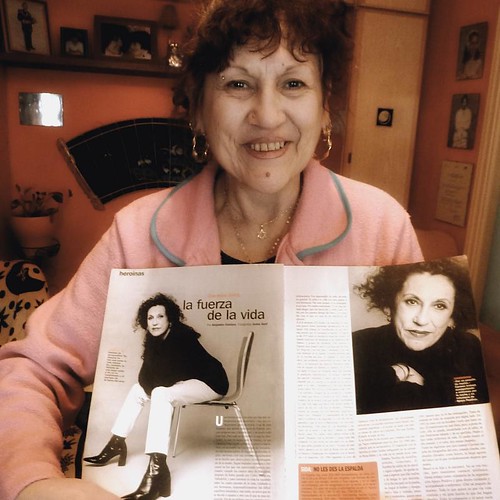
She strokes the photo pendant of her son around her neck as she tells me how she lost both her husband and then her son 3 months later to AIDS in 1996. Although she's also HIV positive her virus has been dormant. I ask her about the stunning professional studio black and white photographs of her on the wall. She tells me that shortly after the double deaths she was featured in an article about heroines in Marie Claire entitled, 'la fuerza de la vida' (the force of life). "I was so thin because I was too sad to eat," she explains when I tell her how guapísima she looks.
Born in a small town in Cáceres to a rigid military father, she got married young to a military sub-official she wasn't in-love with so she could escape her home life. Her husband's personality changed shortly after the marriage and she divorced him some years later while he was in jail. Once he got out of jail, he kidnapped their daughter and disappeared for 15 years. Reeling from the loss of her daughter, she ended up in a relationship with a 'palmero' who took her to Barcelona and pimped her. Carmen later became a heroin addict and prostitute. Her needle use is what infected her with the virus. In 1988 she discovered she was HIV positive. She remarried in 1993 but this was not to end happily. After the deaths of her son and husband from AIDS, she began volunteering at Apoyo Positivo, an organization that supports people with AIDS. She shows me the article and a folder with clippings about Apoyo Positivo. She laughs, pointing out how big her feet look in the photo because the boots she was wearing were lent to her by Marie Claire and they were about 3 sizes too big.
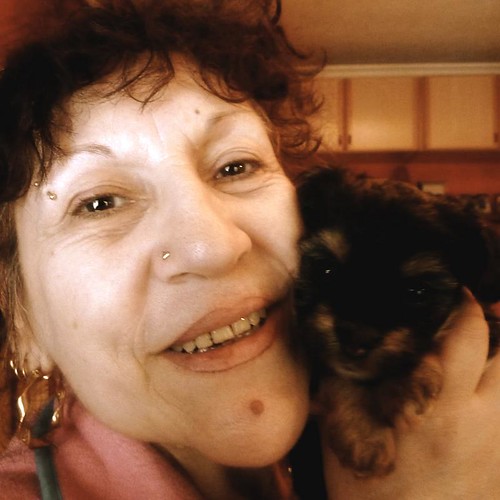
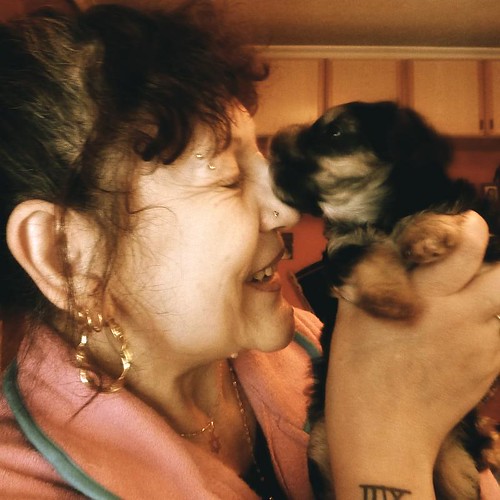
While hers is a tragic story of loss, I know her as a force to be reckoned with and the president of the apartment building I used to live in. She was my next door neighbour for two and a half years and I'm visiting her to see her dog Lucy's new puppy Copola. While I knew the story about her son, I never knew the whole story until this visit. Since I've known her, she's been mugged, fallen down stairs and spent time in the hospital and yet still she exudes more raw energy and life than most people I meet. She is a survivor and an inspiring example of someone who gets knocked down repeatedly but never allows tragedy or hardship to beat her. She gets back up, she plays with her 4 little doggies and she keeps on laughing.
"Mira mira," she calls out to me, as I'm walking out the door into the corrala. Turning around I see her radiant face nodding towards Copola's aggressive play taunting of Chispa and Lucy, and I hear her husky laughter echoing in the courtyard.
A couple weeks ago I wrote about fearless failing and I supposed it was important to create without thought to the results or fear of failure. As a followup, I'd like to share a speech I saw yesterday in which JK Rowling talks about the benefits of failure:
From the transcript:
"So why do I talk about the benefits of failure? Simply because failure meant a stripping away of the inessential. I stopped pretending to myself that I was anything other than what I was, and began to direct all my energy into finishing the only work that mattered to me. Had I really succeeded at anything else, I might never have found the determination to succeed in the one arena I believed I truly belonged. I was set free, because my greatest fear had been realised, and I was still alive, and I still had a daughter whom I adored, and I had an old typewriter and a big idea. And so rock bottom became the solid foundation on which I rebuilt my life.
You might never fail on the scale I did, but some failure in life is inevitable. It is impossible to live without failing at something, unless you live so cautiously that you might as well not have lived at all – in which case, you fail by default.
Failure gave me an inner security that I had never attained by passing examinations. Failure taught me things about myself that I could have learned no other way. " J.K Rowling
Her moving speech about the fringe benefits of failure, the power of the imagination and the value of friendship made me laugh several times and weep even more.
What does it mean to fail? I suppose, it is something each of us needs to decide for ourselves. Someone's failure could be another's success and vice versa. Sometimes, when I'm down on my life, and I think about how I failed to get a proper career job after my expensive university education, and that this makes me a 'loser'. At other times, I'm thankful I succeeded in evading corporate slavery and that this uncertain path through the dense forest is exactly where I am supposed to be. Compared to many, I am free. I still get to do the things I love. I still get to follow my bliss. I don't work in an office 12 hours a day. I live abroad in Spain, munching on olives and sipping good red wine. I may not always have enough money to pay my bills on time, travel or buy clothes but I do have time to read, think, imagine, write, take photos, explore, watch films and research whatever topic happens to catch my fancy. In many ways, I am blessed because I have been such a 'failure'! Failure has always led me in alternative directions, some delightful, others not so much. Failure has also taught me that I can survive and thrive in spite of it all. So now, as I continue to wander down my precarious trail (my January blues hopefully now behind me), I will try to keep in mind that there is indeed beauty in uncertainty and benefits in failure.
It is my hope that you will remember this too.
"As is a tale, so is life: not how long it is, but how good it is, is what matters." Seneca
"We do not need magic to change the world, we carry all the power we need inside ourselves already: we have the power to imagine better." J.K Rowling